
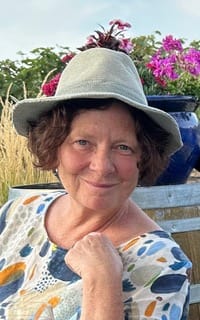
My name is Diane and I have ADHD. I was diagnosed three years ago as a 61-year-old. It was an astounding revelation to me. Previously, I had been diagnosed with depression and anxiety but neither of those diagnoses nor the medications used to treat them ever felt right. Now, with the ADHD lens, I see that my very busy mind was creating feelings that I did not know how to process. I have spent the past few years exploring what this new diagnosis means and how it may explain my lifelong mental health challenges. With a mix of relief and sadness, I have come to understand how my brain works. But I also came across a few things that really surprised me.
I will admit I knew very little about ADHD prior to the late diagnosis. I had the common misconception that it was only related to young boys with too much energy. Yet here I was, a post-menopausal woman who did not fit into that narrow view. What I uncovered was that I was not alone. More people than ever are being diagnosed later in life - especially adult women.
The first surprise for me was learning about gender differences in ADHD. It is well understood that women’s health research has lagged men’s health research for decades in all areas. I learned that ADHD was no different. ADHD research was generally done with only men and boys until the early 2000s. Newer research combined with changes to the diagnostic criteria in 2013 have been helpful in getting more women and girls diagnosed. With more inclusive research, it became clear that ADHD presented differently in women and girls. Firstly, the physical energy shown in males with ADHD more often showed up as mental energy in females. This could look like a girl who daydreams a lot or can’t quiet their mind. As well, societal behaviour expectations for women and girls led to more masking in females as they tried desperately to fit in and feel normal. This meant that despite constant noise in female brains, their symptoms seemed invisible. And finally, the role of hormones in ADHD was a missing component. It is now understood that changes in estrogen levels (menstrual cycles, pregnancy, and menopause) can exacerbate ADHD symptoms to a point where they can no longer be dismissed. While many women, like me, got entirely missed or given the wrong diagnosis when they were younger, new research that improved diagnostic criteria has been helpful in finally getting women the help they need.
The benefit of getting a late ADHD diagnosis is that awareness provides an opportunity for reflection. This reflection led me to figure out how ADHD had played a part in why I am the way I am. I spent years blaming myself for things I thought of as character flaws. And while neurodivergence is often seen as a negative, I was also surprised to learn that there are also many positives to a brain that works so differently.
Some of my behaviours that could be considered negative or problematic include:
However, many of my character traits could be seen as positives and include:
I think everyone, even those without ADHD, could look at their own personality and find both negative and positive attributes. With ADHD, it is easy to see only the undesirable, but we should not dismiss the superpowers that we do have.
Lastly, I was also surprised at how many questions I had about my life and the ADHD diagnosis itself. A late diagnosis makes you look back and question so many things. What I found is that not only did I have a lot of questions about my diagnosis, but I also had some answers about my personality and my life struggles.
Some of the questions I had included:
Not only were there plenty of questions, but I also had some answers. The most important one being that I finally had an explanation for the trouble I had regulating my thoughts and emotions. I also had many ‘aha’ moments regarding the difficulties I had with focusing or relaxing, my dopamine-seeking behaviours and my relationship issues over the years. These revelations gave me a strange sort of validation for how my personality and my life had unfolded.
I am thankful for getting an ADHD diagnosis, even if it was late in life. It was the beginning of a big learning curve of self-discovery that included hours of therapy as well as reading many books and listening to many podcasts. I have now come to a place where I feel very lucky to have found understanding from my family, a community in others with ADHD and the knowledge that despite dealing with this big unknown throughout my life, I did my best. The self-compassion that has grown in me has been life-changing and for that I am grateful.
Diane Heaton lives in Calgary and recently wrote a chapter about her ADHD journey in the book ‘The Embers We Carry’ – FoundHer Series Volume 3.

When I was growing up, many people thought I was a... Read More

If you have ADHD, being able to juggle multiple wo... Read More

For most of my life, I thought I was just a train... Read More

After-school meltdowns, anger or tears that seem t... Read More

When I was diagnosed with ADHD at 48, it didn’t fe... Read More
