
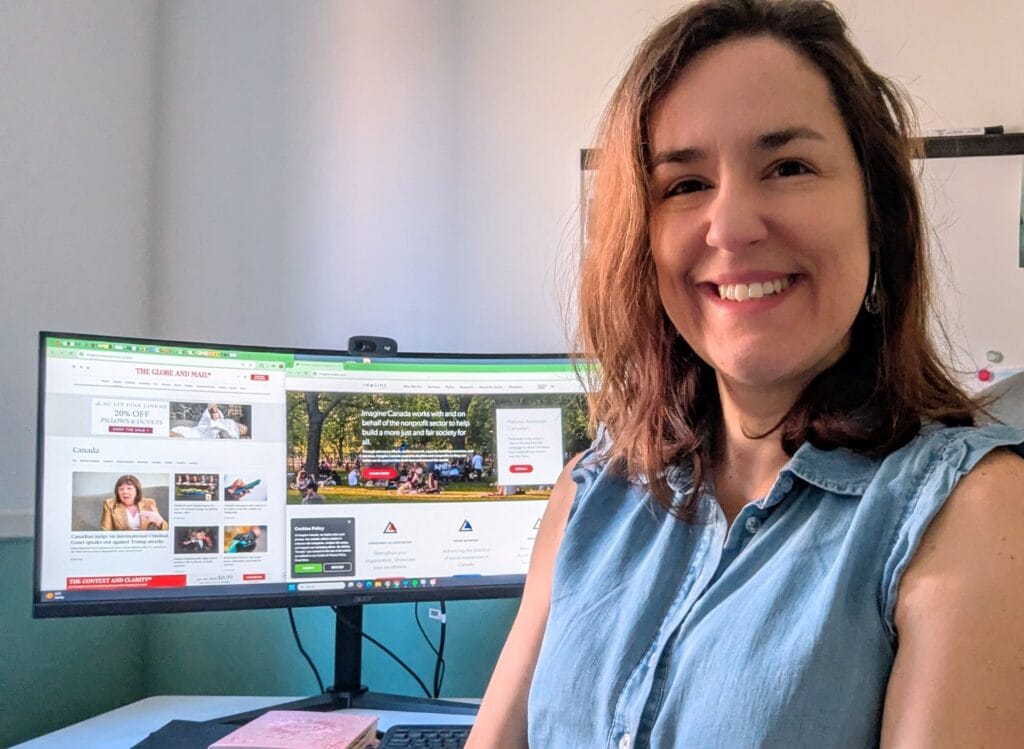
I was diagnosed with ADHD and autism as an adult, after years of working in communications and filling my spare time with writing and other projects. My brain is great at seeing possibilities, but keeping track of all the moving pieces once I decide to pursue them can be a challenge. After trying dozens of notebooks, apps, and spreadsheets, I've found that AI is the most useful tool for managing my ideas and projects. It's made a surprisingly big difference in how I manage my ADHD day-to-day.
As a communications manager at a nonprofit, I'm usually juggling several projects at once. I might be working on an annual report, planning a campaign, and coordinating website updates, all involving different people, reviews, and deadlines. Between approvals and follow-ups, a plan that makes sense on Monday can look completely different by Wednesday.
Most of my attempts to get organized worked beautifully for a while, until I got busy, forgot to update them, or simply lost interest. I have an impressive collection of abandoned organizational systems, some of them beautifully colour-coded.
Keeping track of scattered ideas without another spreadsheet
A lot of my work starts with reading. I might read a government announcement, see a connection to something a partner organization has shared, and start looking at how it’s being covered. What could the announcement mean for the young people we work with? Is there something we’ve seen firsthand that would add to the story?
By then, I usually have a pile of links and notes. AI helps me organize them and keep track of what I still need to check. I decide what’s worth pursuing and where it belongs. Sometimes I write an op-ed or a piece for our newsletter. Sometimes I bring an idea to the team.
Outside work, I have another problem: books. I'm a children's book author, and I seem to have an unlimited supply of ideas for new stories. While working on one book, I'll think of something that could improve another, a new character, or an entirely different story that suddenly seems terribly exciting. I used to fill notebooks with these thoughts, along with doodles and random observations, only to rediscover them months later. I still love writing by hand and use my notebooks for journaling and drawing, but I've found a much better way to keep track of my creative projects.
One of my favourite examples is a dedicated ChatGPT conversation for a book I'm planning based on my outdoor adventures with my two sons. After our walks, I share the things we discovered, funny things they said, and conversations I want to remember. Sometimes it's a new fungus we found. Other times it's a dead squirrel that led to a surprisingly interesting discussion about nature, death, and decomposition. AI helps me organize these observations, identify recurring themes, and connect them to other ideas I've been collecting for the book. By now, it's also familiar with my sense of humour, so it gives me plenty of laughs.
I love being able to build this collection little by little. When I'm ready to write the book, I'll have months of memories, conversations, and observations to draw from, including things I would almost certainly have forgotten otherwise.
I use a similar approach with the books I'm already working on, keeping track of feedback I've given my illustrator, decisions I've made, and ideas I want to revisit. I can return to a project after a few weeks and ask for a summary of where I left off. I can also set reminders for things I want to work on later, so I don't have to interrupt whatever I'm doing every time another idea comes along.
More ideas, more projects and, surprisingly, more peace
One of the most unexpected benefits of using AI has been how much it's helped me rest. My mind just won't shut up. I can be physically exhausted, lying in bed, and suddenly remember something I wanted to do at work, come up with an idea for a book, or start mentally planning a project that hadn't even crossed my mind earlier that day. Sometimes I can't sleep because I'm worried I'll forget an idea I'm excited about.
Writing things down helped, but I often kept thinking about them anyway, trying to develop them or figure out when I'd have time to act on them. Now I can get those thoughts out of my head, organize them, and arrange to revisit them later. I still have restless nights, but I feel less pressure to keep every unfinished thought circulating in my head.
There's a downside to all this, though. The easier it is to follow through on an idea, the easier it is for me to take on too much. Things I might previously have abandoned because the research, planning, or coordination seemed too time-consuming now feel entirely possible. I can accomplish more, and naturally, that makes me want to do more. My enthusiasm remains considerably greater than the number of hours available in a day, not to mention the patience of my three kids, who demand snacks all the time.
I'm learning to be more selective about which ideas I pursue. Having everything organized helps me see how much I've already committed to, and I can leave interesting possibilities for another time without worrying they'll disappear forever.
I still have more ideas than time, and I suspect I always will. Some are becoming actual projects, some are waiting for their turn, and a few will probably remain ridiculous ideas I had at two in the morning. At least now I know where to find them.
About the author: Thais Freitas is a communications professional and writer based in Ottawa. Her first picture book, My Busy Builder Brain, follows an autistic boy who loves construction vehicles. The story was inspired by her son, who knows more about them than she ever will. Her work explores family life, neurodivergence, and the pleasures of getting sidetracked outdoors. Find more at thaisfreitas.com.

Some adults with ADHD perform exceptionally well i... Read More

It is widely thought that ADHD causes a lack of fo... Read More

When I was growing up, many people thought I was a... Read More

If you have ADHD, being able to juggle multiple wo... Read More

For most of my life, I thought I was just a train... Read More
